
A cultural guide to Barranquilla Carnival – what it means, how it works, and how people who actually know what they’re doing experience it.
If you’ve ever glanced at a map of Colombia, Barranquilla is that bold dot on the Caribbean coast you might recognize for reasons mostly involving Shakira’s hips or Sofía Vergara’s accent. But long before global pop culture claimed it, Barranquilla was already doing the most.
Sitting right where the Magdalena River spills into the sea, the city grew as a major port and industrial hub – and with ships came people. Lots of them. In the late 19th and early 20th centuries, Barranquilla became one of Colombia’s most cosmopolitan cities, earning the nickname “The Golden Door of Colombia” thanks to its pier and nonstop trade. Jewish families arrived, along with immigrants from Syria, Lebanon, Palestine, France, Germany, Italy, the U.S., China, and Japan. Locals, inaccurately but enthusiastically, lumped many Middle Eastern arrivals under the label “Turcos.”
This cultural convergence propelled Barranquilla into modernity and gave it a distinctly international character. Barranquilla was built to receive – ships, people, cultures, noise – and Carnival is simply that instinct, turned all the way up.
Discover the Secrets of Barranquilla
What Barranquilla Carnival Really Is
Barranquilla Carnival is often called a party, which is a bit like calling water a ‘bit wet’. Yes, there is music, dancing, and a citywide disregard for indoor voices, but Carnival is something far more intentional. It’s a cultural inheritance built on Afro-Caribbean rhythms, Indigenous traditions, and Spanish influence, layered together over centuries into something distinctly Barranquillero.
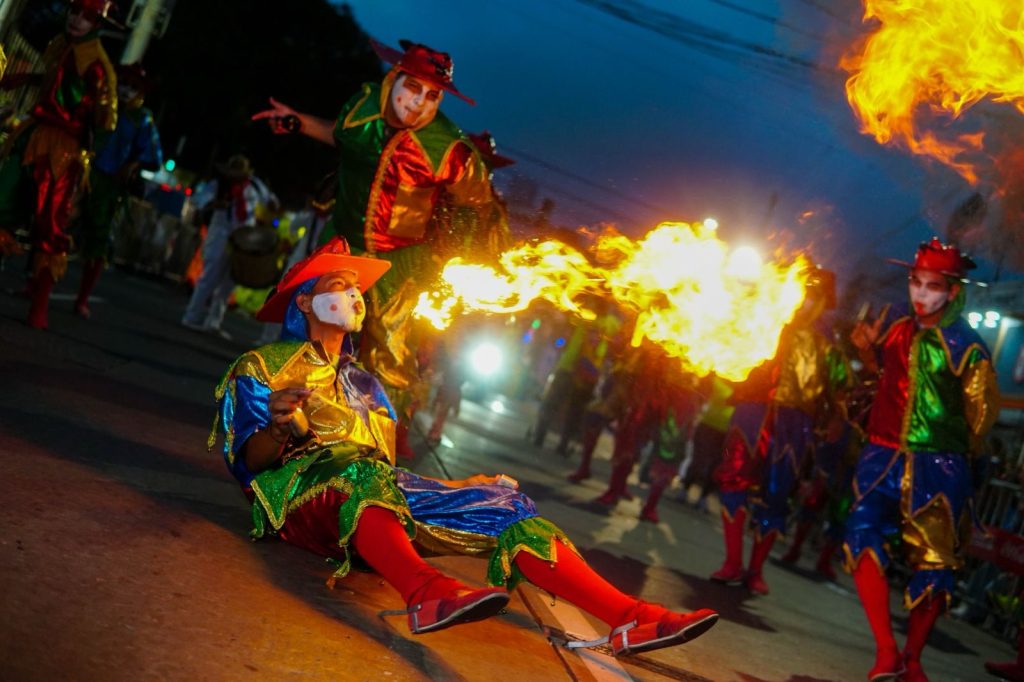
Recognized by UNESCO as Intangible Cultural Heritage, Carnival isn’t staged for spectators, it’s lived. Costumes exaggerate, dances tell stories, and satire does the heavy lifting, poking fun at power, tradition, and anything taking itself too seriously. This is celebration with a sharp sense of humor and a long memory.
Music and dance aren’t decorative here; they’re the main event. From cumbia to mapalé to chandé to salsa, each rhythm carries history, resistance, and joy, sometimes all at once. Carnival doesn’t just entertain, it observes, critiques, and occasionally roasts.
The Rhythm of the Days
Carnival may feel chaotic, but it is not improvisational. Beneath the glitter, drums, and collective loss of normal sleep schedules lies a surprisingly clear structure, and knowing when there is time to relax and when there is not.
One crucial thing to understand: Carnival is largely a daytime affair, and this is the Caribbean. It’s a marathon disguised as a dance party. Knowing what happens when, and pacing yourself accordingly, is the difference between ending the day exhilarated or questioning every life choice you’ve ever made. And remember – STAY HYDRATED (beer doesn’t count!).
When is it?
Barranquilla’s main events take place in the four days leading up to Lent, but in Barranquilla, preparation is a long-term commitment. The city warms up for months in advance, because no one launches South America’s second-largest Carnival without a proper rehearsal.
For locals, La Guacherna is a given. For first-time Carnival-goers, it’s the moment you realize Barranquilla has been holding out on you. Taking place one week before the main parades, La Guacherna is a nighttime procession that trades grandstands for lanterns and daylight for atmosphere.
Revived by composer Esthercita Forero in homage to neighbors who once rehearsed their dances in poorly lit streets, the parade winds through the city with music, candles, and a distinctly nostalgic energy. It’s lively without being overwhelming, traditional without feeling staged, and widely considered the most important pre-Carnival event.
If Carnival is the headline act, La Guacherna is the insider preview, and one of Barranquilla’s best-kept traditions.
How long does it last?
The headline parades unfold over four consecutive days, but Carnival doesn’t simply appear on a Saturday and disappear on Tuesday. A full calendar of events builds momentum in the weeks leading up to the main weekend, ensuring that by the time it begins, the city is more than ready.
How does it unfold?
Carnival kicks off on the Saturday before Ash Wednesday with the Batalla de Flores, the most iconic and visually spectacular parade. Sunday and Monday are dedicated to La Gran Parada, where traditional dances, elaborate costumes, and orchestras take center stage, accompanied by nonstop Caribbean and Latin music.
Tuesday brings Carnival to a close with the symbolic Burial of Joselito Carnaval – a tongue-in-cheek farewell to excess, joy, and very little sleep, mourned dramatically by a city that knows it will do it all again next year.
Find out More From a Specialist
What Your Body Would Like You To Know
Barranquilla Carnival is not a light workout. Expect heat, crowds, and a neverending soundtrack. The joy is real and contagious, but so is the sensory overload, which is exactly why planning matters. This is not the festival where “we’ll just see what happens” ends well. Knowing when to arrive, where to stand, and when to retreat for shade can mean the difference between bliss and burnout. Carnival is generous, but it demands stamina, hydration, and at least one strategic sitting break.
BRING:
- Breathable clothing (a practical choice, not a fashion statement)
- Sunscreen (optimism is not sun protection)
- A small, hands-free bag you can keep in sight
- Cash, preferably in small bills
DON’T BRING:
- Valuables you’re emotionally attached to
- Expectations of personal space
- Tight schedules (Carnival does not run on Google Calendar)
- Anything that reacts poorly to sweat
DO:
- Respect the costumes and performers, they are the professionals
- Learn a few basic dance steps (no one expects excellence)
- Follow the local rhythm; it’s been tested over decades
- Pace yourself. There are multiple days.
DON’T:
- Treat it like a costume party
- Drink all day without eating (self-explanatory)
- Block parades for photos (this will not end in your favor)
How Locals With Experience Do Carnival
Ask a ‘Killero who has been doing Carnival for decades and a pattern quickly emerges. They still show up. They still celebrate. They’ve simply discovered that there is a smarter way to do it.
Experience tends to come with a seat – preferably in an official stand, ideally in the shade. There is a plan for getting there and, just as importantly, for getting home. Celebrating is enthusiastic but selective; not every event needs attendance, and not every night needs to end at dawn. At a certain point, knowing when to leave becomes a skill.
This is not about doing less. It’s about doing Carnival better. Experience doesn’t dampen the fun, it refines it.